AE_ADMIN
- February 1, 2025
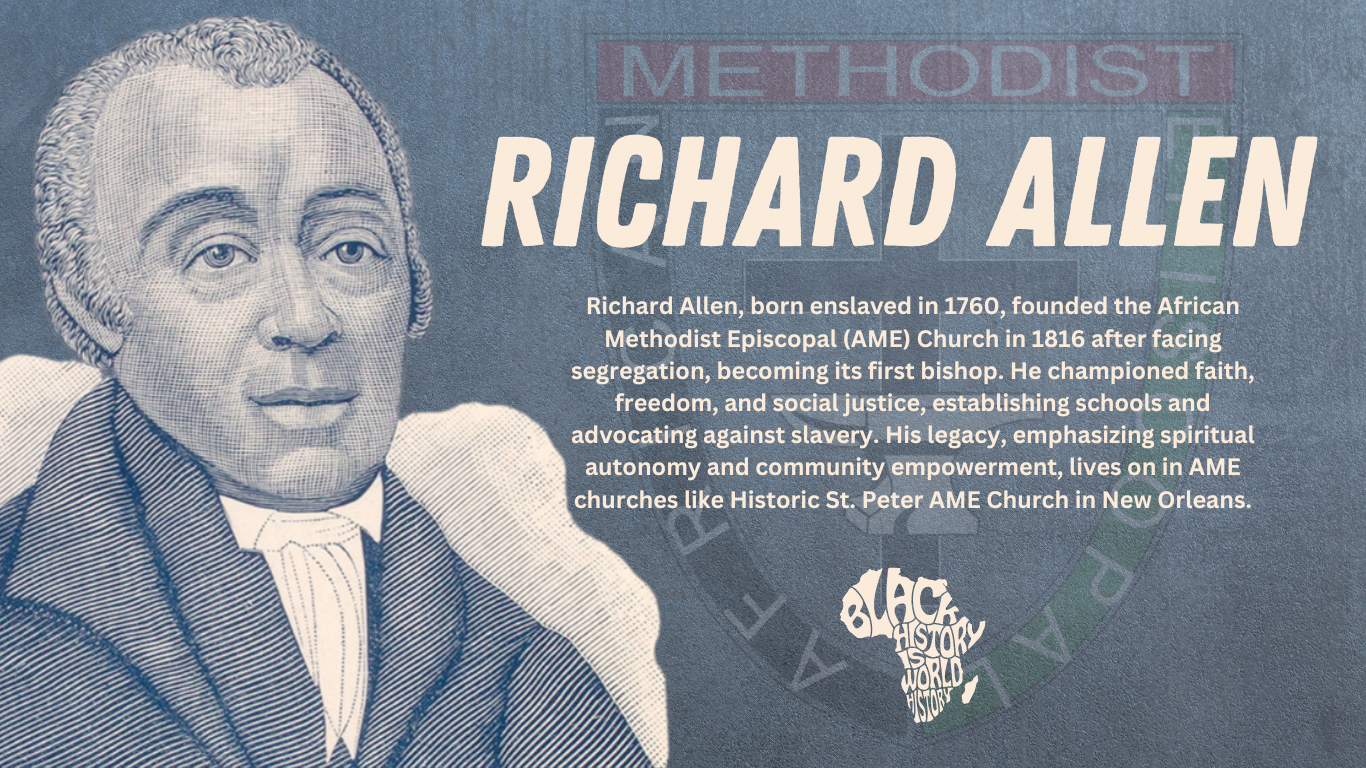
Richard Allen, born into slavery in 1760, emerged as a pivotal figure in American history and a champion of Black empowerment. His unwavering faith and tireless efforts led to the establishment of the African Methodist Episcopal (AME) Church, the first independent Black denomination in the United States. Allen’s legacy of spiritual leadership, social activism, and community building continues to inspire and uplift, particularly within congregations like Historic St. Peter AME Church in New Orleans, Louisiana.
Early Life and Spiritual Awakening
Allen’s journey began in Philadelphia, where he was sold into slavery as a child. Despite the hardships of his enslaved life, he found solace and strength in Christianity. At 17, he converted to Methodism and began preaching, even while enslaved. His powerful sermons and unwavering faith resonated with both Black and white audiences.
The Birth of the AME Church
As Allen’s ministry grew, he faced increasing discrimination and segregation within the predominantly white Methodist churches. Determined to create a space where Black people could worship freely and without prejudice, Allen and other Black congregants walked out of St. George’s Methodist Church in Philadelphia in 1787. This bold act marked a turning point in the fight for religious freedom and self-determination for African Americans.
In 1794, Allen founded the Bethel African Methodist Episcopal Church in Philadelphia, which became the “Mother Church” of the AME denomination. He was ordained as the first bishop of the AME Church in 1816, solidifying his role as a spiritual leader and visionary.
Legacy of Empowerment and Social Justice
Allen’s impact extended far beyond the walls of the church. He was a passionate advocate for abolition, education, and social justice. He established schools for Black children, organized mutual aid societies, and spoke out against the injustices of slavery and racial discrimination.
Richard Allen’s Legacy at Historic St. Peter AME Church
Historic St. Peter AME Church, founded in 1849, stands as a testament to Allen’s enduring legacy in New Orleans. As part of the AME denomination, the church embodies the principles of spiritual autonomy, social activism, and community empowerment that Allen championed.
Through its various ministries and outreach programs, Historic St. Peter AME Church continues to serve the spiritual, educational, and social needs of its community, just as Richard Allen envisioned. The church’s commitment to social justice and equality echoes Allen’s own tireless efforts to uplift and empower Black people.
Conclusion
Richard Allen’s life and work stand as an inspiration to all who seek to create a more just and equitable world. His legacy continues to resonate within AME churches across the nation, including Historic St. Peter AME Church in New Orleans. As a beacon of faith, freedom, and community service, the church honors Allen’s memory by carrying forward his mission of spiritual empowerment and social change.